
taz Talk and Film : How development banks fail
Examples from Bangladesh and India show the need for more monitoring and for protection of communities.
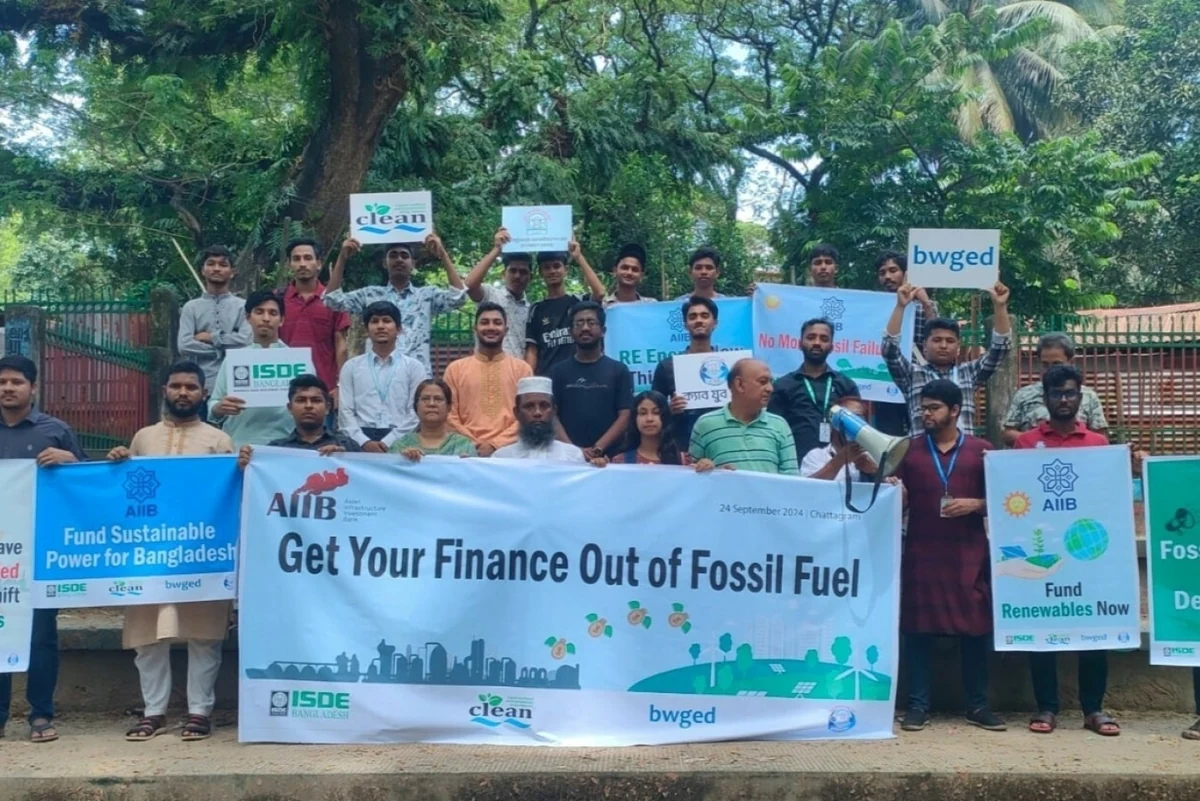
Fueling the climate crisis, destroying the environment, and ignoring the needs of local communities: all too often, muliteratal development banks (MDBs) fail to take into account local people and the environment.
When: Friday June 12, 2026, 6:30 PM
Entry: 6 PM
Where: taz Kantine, Friedrichstr. 21, 10969 Berlin and livestream via Youtube
Film and discussion in English. No translation provided. Participation at taz Kantine is only possible with a ticket booked in advance. Please register via this ticket portal. Seating is limited; admission is free. The event is accessible to people with disabilities.
In Asia, these banks play a key role, particularly in financing infrastructure and renewable energy. MDBs like the Washington-based World Bank and the Beijing-based Asian Infrastructure Investment Bank (AIIB) are mandated to invest their member states’ tax revenues to reduce global povery and a „prosperous Asia based on sustainable economic development” (AIIB).
As a significant shareholder, Germany bears responsibility how these mandates are fulfilled. Yet to often large sums are committed to projects without the voices of affected communities being heard. This talk wants to bring the experiences of those living with MDBs-financed projects directly into the political debate.
But all too often MDBs fail to take into account local people and the environment when financing fossil fuel projects. The new short documentary „Bhola IPP: People & Ecology in Peril” from Bangladesh makes serious allegations against the AIIB and the World Bank's Multilateral Investment Guarantee Agency (MIGA).
It shows the example of the gas fired power plant Bhola in Bangladesh how the two mulitnational banks with Germany as an important shareholder have sparked widespread concerns over pollution, community displacement, and threats to biodiversity. The film produced by CLEAN in Bangladesh calls for urgent monitoring, stricter oversight, and a pivot toward sustainable energy solutions that protect communities rather than endanger them.
The discussion will focus on questions like: How can people and the environment be better protected in the context of development finance? How can accountability mechanisms be improved? What do local people expect from Germany? How can Germany use its influence to push the World Bank and the AIIB away from financing harmful projects and fossil fuels?
Introduction:
🐾 Nora Sausmikat Senior Campaiger Multilateral Financial Institutions, China and AIIB expert, Urgewald, Cologne
Film: “Bhola IPP: People and Ecology in Peril” directed by Gayetree Arun, 15 mins
Panel discussion with:
🐾 Hasan Mehedi Chief Executive of the Coastal Livelihood and Environmental Action Network (CLEAN), Khulna, Bangladesh
🐾 Vidya Dinker President of the Indian Social Action Forum (INSAF), New Delhi, and Chief Executive of Growthwatch
🐾 Dustin Schäfer Expert Multilateral Financial Institutions and Accountability mechanisms, Urgewald
Moderator:
🐾 Sven Hansen is Asia editor at taz and curator of Han Sen's Asientalk
In Cooperation with Han Sen’s Asiatalk and Urgewald.
Empfohlener externer Inhalt

Would you like to submit questions for this event in advance? Or provide audience feedback after the discussion? Write us! We look forward to hearing from you at taztalk@taz.de
